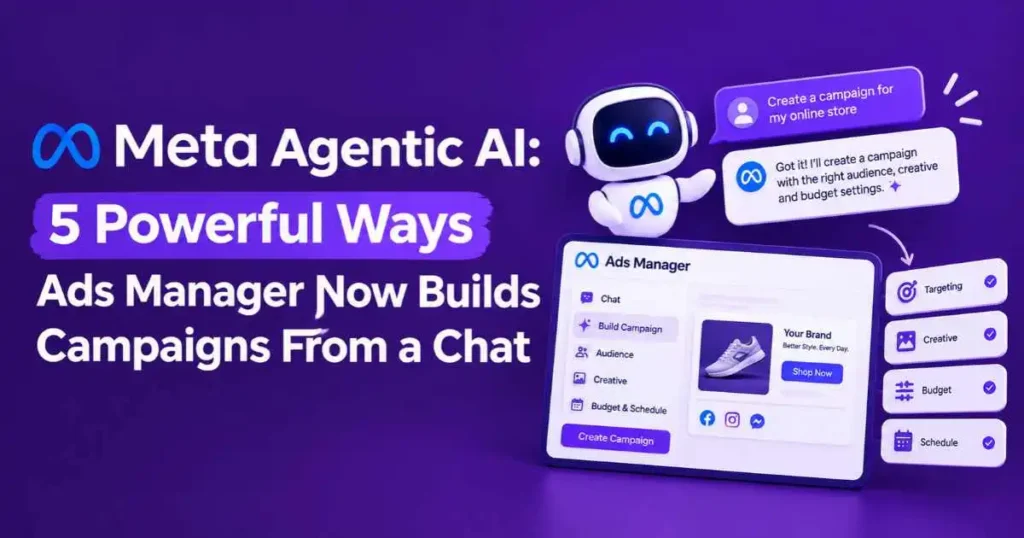
Have you ever spent a whole afternoon clicking through Ads Manager menus just to launch one simple campaign? Choosing objectives, audiences, budgets, and creative can eat hours you’d rather spend on strategy. That daily grind is exactly what Meta’s new agentic AI is designed to shorten.
At Advertising Week New York on October 6, 2026, Meta announced that its business assistant inside Ads Manager is moving from answering questions to taking action. In this guide, you’ll learn what agentic AI means in plain English, five ways it changes how you run campaigns, and how to stay in control while using it.
What Does Agentic AI Actually Mean?
A normal AI tool answers questions. An agentic AI tool works toward a goal and takes steps for you.
Instead of asking, “Which ad set is overspending?”, you could say, “Lower the budget on weak ad sets and shift money to the winners.” The assistant then does the work, while you review and approve it. Meta describes this as happening under human oversight, so you stay in charge of what goes live.
1. It Can Build Campaigns From a Conversation
According to trade coverage of the announcement, advertisers can plan, launch, and manage campaigns using natural language prompts.
That means you describe your goal, product, and budget in plain words, and the assistant helps set up the campaign. For beginners, this lowers the barrier to launching, because you no longer need to memorize every menu.
2. It Can Adjust Targeting and Budgets
Meta also said the assistant can generate creative elements, update targeting, and even change an ad’s budget using conversational prompts.
This is where agentic AI changes the job. Earlier, the assistant mainly analyzed your data. Now it can act on what it finds, which saves time on routine adjustments.
3. It Remembers Your History
One of the most useful details is persistent memory. Reports say the assistant can retain context such as last quarter’s tests, seasonal trends, and your goals across sessions.
Meta is also testing tools that let brands import their strategy documents and brand voice guidelines. If you’ve ever repeated the same instructions to a tool every week, you’ll see why this matters. Memory is what makes agentic AI feel more like a teammate than a chatbot.
4. Customer Lifecycle Strategy Keeps It Focused
Meta is making Customer Lifecycle Strategy available to all advertisers. It lets you decide which audience each campaign is meant for, such as new customers or past buyers.
This keeps the assistant’s recommendations aligned with your top-level goal, instead of optimizing for whatever looks best on paper.
5. Outside AI Tools Can Stage Draft Campaigns
Meta also expanded its Ads MCP server, which allows third-party AI tools to connect to Ads Manager. Reports say these tools can stage draft campaigns, with permission controls and required human sign-off before publication.
For agencies managing many accounts, agentic AI opens the door to faster workflows without giving up final approval.
Earlier Assistant vs Agentic AI Assistant
Here’s a quick comparison. Rollout can vary by account, so check what you can see in yours.
| Capability | Earlier Assistant | Agentic Assistant |
|---|---|---|
| Answer performance questions | Yes | Yes |
| Create campaigns | No, analysis only | Yes, through prompts |
| Change budgets and targeting | No | Yes, with oversight |
| Remember past context | Limited | Persistent memory |
| Human approval | You made every change | You approve actions |
This table shows why the shift matters. The tool moves from advisor to assistant that works alongside you.
A Quick Example to Bring This Together
Imagine a small candle shop owner preparing a weekend sale. She types, “Create a weekend campaign for my best-selling candle, with a fifty dollar daily budget, aimed at past customers.”
The assistant drafts the campaign, and she reviews the audience, creative, and budget before approving. What used to take an hour of menu clicking takes a few minutes, and she still decides what goes live. That is agentic AI at its most practical.
Actionable Tips You Can Apply Today
Here’s a simple way to start safely:
- Check Ads Manager to see which agentic AI features appear in your account
- Start by asking it to draft something rather than publish it
- Write your goals and brand rules in a short document for reference
- Review every change before approving, and compare it to your current settings
- Keep a simple log of changes and dates so you can see what moved performance
Small, careful steps help you gain speed without losing control.
Common Mistakes to Avoid
Even helpful automation can cause trouble when used carelessly.
Approving changes without reading them. Human sign-off only helps if you actually review what the assistant proposes.
Giving vague instructions. A prompt like “make this better” leaves too much room for guesswork.
Changing too much at once. Frequent budget and targeting edits can disrupt learning, so make fewer, more deliberate moves.
Skipping spending limits. Set clear budget caps so a mistaken instruction can’t spend more than you intended.
Assuming agentic AI replaces strategy. The assistant executes, but your goals, offers, and creative still drive results.
Final Thoughts
Agentic AI marks a real change in how Ads Manager works, turning the assistant from a helper that explains into one that acts. Used with clear goals, careful review, and sensible budget limits, it can save hours of routine work.
Take a few minutes today to check which assistant features appear in your account, and try one small, low-risk request to see how it behaves.
Frequently Asked Questions
1. What is agentic AI in Meta Ads Manager?
It’s an assistant that can take actions, such as drafting campaigns or adjusting budgets, instead of only answering questions.
2. Can it publish campaigns without my approval?
Meta describes the system as working under human oversight, with sign-offs required in some workflows, so review what you approve.
3. Is this available in every ad account?
Rollout can vary by account, so check your Ads Manager for the features you can use.
4. Does it remember my past campaigns?
Reports say it has persistent memory for past tests, seasonality, and goals, and Meta is testing imports for brand guidelines.
5. Will it replace my media buyer?
Not entirely. It handles routine execution, while strategy, creative judgment, and final approval still need a person.
