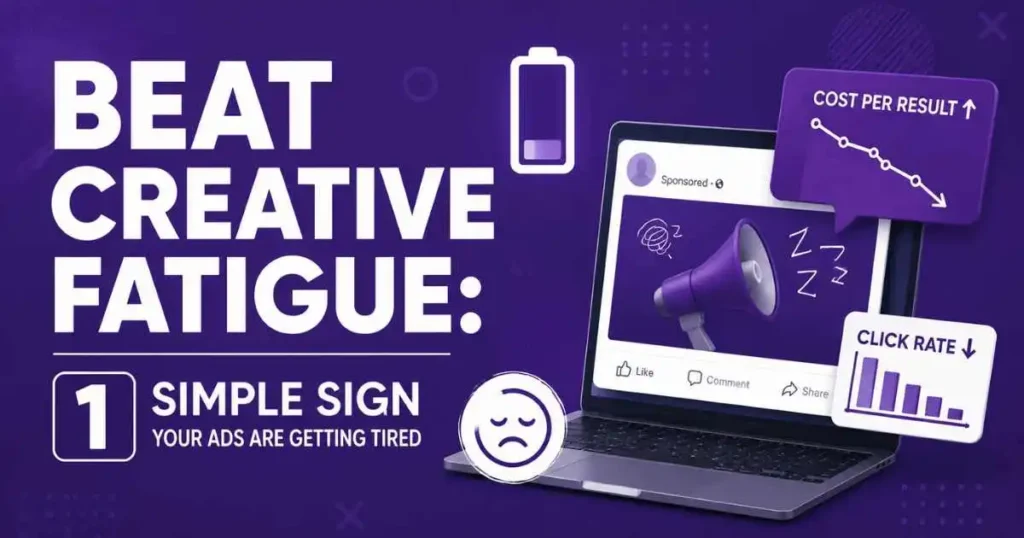
Your ad was working great last week. Same audience, same budget, same creative. But this week, your cost per result is climbing and nothing else has changed. It’s not bad luck. It’s not a broken pixel. It’s your ad getting tired, and your audience getting tired of it.
This is called creative fatigue, and once you know how to spot it, you can fix it before it quietly eats your budget for days without you even noticing.
Let’s break this down the simple way, no confusing numbers, no fancy tools required.
Table of Contents
What Creative Fatigue Actually Means
Imagine someone tells you the same joke five times in one week. The first time, you laugh. By the fifth time, you’re just tired of hearing it.
Your audience feels the same way about your ads. The first time someone sees your ad, they pay attention. But if they keep seeing that exact same ad again and again, they stop noticing it. Eventually, they stop clicking, and sometimes they even get a little annoyed seeing it show up in their feed one more time.
That drop in interest is creative fatigue. It’s not that your product got worse. It’s that the same creative has been shown too many times to the same people, and it simply stopped feeling new.
Why This Matters More Under the New Algorithm
If you’ve read about the Meta Ads Algorithm shift, you already know creative is the main thing driving your results now, more than your targeting settings. That’s exactly why creative fatigue matters so much today.
When your creative is fresh, the algorithm has something interesting to test and show to new people. But when your creative goes stale, the algorithm keeps leaning on it anyway, showing it to the same tired audience, because it’s still the best option it has in your account. Your results slowly decline, even though your setup hasn’t changed at all.
This is why simply “fixing your targeting” rarely solves the problem. The real fix almost always lives in your creative.
The Simple Sign You Can Spot Without Any Tools
You don’t need fancy dashboards or complicated metrics to notice fatigue. Watch for this one simple pattern:
Your cost per result slowly climbs, while your click rate slowly drops, and nothing else in your account has changed.
That’s it. If your cost to get a sale or a lead keeps creeping up over several days, and fewer people are clicking your ad compared to when you first launched it, that’s your sign. Your audience has simply seen it too many times.
A quick way to check this yourself is to look at your ad’s performance from its first few days compared to now. If it started strong and has been sliding downward for a week or more with nothing else changed, fatigue is very likely the cause.
Why Small Accounts Get Hit Faster
If you’re running ads on a smaller budget, this happens to you faster than it does to big brands with huge audiences. Here’s why.
With a smaller budget, Meta usually shows your ad to a smaller group of people. That smaller group sees your ad more often in a shorter amount of time, simply because there are fewer new people to show it to. This means fatigue can creep in within days for a small account, while a big brand spending lakhs a day might not notice it for weeks.
If you’re a beginner running your first few campaigns, this is exactly why your ad might feel like it “stopped working” after just five or six days. It’s not broken. It’s just tired.
How to Actually Fix Creative Fatigue
Once you notice the pattern, here’s what to do about it.
Swap the creative, not just the text. Changing your headline alone often isn’t enough. Meta’s system can recognize when an image or video looks nearly identical, even with different words on it. Change the visual itself, the hook, or the format.
Build a small library ahead of time. Instead of scrambling to make a new ad the moment fatigue hits, keep two or three backup creatives ready to go. When you notice the signs, you can swap in a fresh one immediately instead of losing days to a slow, declining ad.
Diversify your formats. If your original ad was a UGC-style video, try a founder ad or a before-and-after format next. Different styles reach and re-engage people differently, even within the same audience.
Don’t touch your targeting first. It’s tempting to think the audience is the problem, but usually it isn’t. Refreshing your creative solves fatigue far more often than adjusting your targeting does.
A Simple Example
Say you’re running an ad for a home fitness product. In week one, it performs beautifully, low cost per purchase, strong clicks. By week two, the cost has crept up by 30%, and clicks have dropped noticeably, even though you haven’t touched a single setting.
Instead of panicking or turning off the campaign completely, you swap in a new creative, maybe a founder-style video explaining why you built the product, instead of the original demo video. Within a couple of days, performance often bounces back close to where it started. That’s creative fatigue being solved the simple way, no tools, no complicated dashboards, just fresh creative doing its job.
Mistakes to Avoid
A good mentor points out the mistakes before you make them, so here’s what to watch for.
Waiting too long to act. The longer a fatigued ad keeps running, the more budget it quietly wastes. Catch the pattern early and act on it.
Only changing small details. A new headline on the same old image rarely solves real fatigue. The core creative usually needs to change.
Blaming the audience first. Most of the time, the people are fine. It’s the same message reaching them too many times that’s the actual problem.
Turning off the whole campaign instead of refreshing it. You usually don’t need to start over. You just need new creative feeding into the same, already-working setup.
Keeping Your Ads Fresh Going Forward
The best way to stay ahead of creative fatigue is to treat creative like something you refresh regularly, not something you set once and forget. Keep a simple rotation, a few different formats, a few different hooks, ready to swap in whenever you notice performance sliding.
You don’t need to reinvent your whole strategy every week. You just need enough variety sitting ready so that when one creative gets tired, you already have the next one ready to take its place.
Stay consistent with this habit, and you’ll spend far less time wondering why your ads suddenly stopped working, because you’ll already know exactly what to check, and exactly what to do about it.
FAQs
1. What is creative fatigue in simple words? It’s when your audience has seen the same ad too many times and stops responding to it, even though nothing else about your campaign has changed.
2. How do I know if my ad has creative fatigue? Watch for a slow rise in your cost per result along with a slow drop in clicks, while everything else in your account stays the same.
3. Does creative fatigue happen faster on smaller budgets? Yes. Smaller budgets usually reach fewer people, so that smaller audience sees your ad more often in a shorter time.
4. Should I fix my targeting or my creative first? Almost always fix your creative first. Targeting is rarely the real cause of declining performance under the new algorithm.
5. How often should I refresh my ad creative? There’s no fixed number, but keeping two or three backup creatives ready at all times helps you react quickly the moment you notice fatigue.
